
Whale Watching in Puerto Rico: A March Guide
March brings a particular kind of visitor to Puerto Rico’s northwest coast.
Every year, humpback whales migrate through the waters around the island, and whale watching in Puerto Rico is at its best during the first few months of the year.
For guests staying at Villa Montaña, that makes March an interesting time to be on this side of the island.
There are never any guarantees when wildlife is involved, of course. But even knowing that whales may be passing offshore adds something different to a day spent by the ocean.
When Is Whale Watching Season in Puerto Rico?
Humpback whale season in Puerto Rico generally runs from January through March.
During this period, whales travel through the warmer waters of the Caribbean as part of their annual migration.
Puerto Rico’s western and northwestern coastline is one of the best areas of the island for sightings, including the waters around Aguadilla, Isabela and farther south along the west coast.
That makes March one of the final opportunities of the season for visitors hoping to catch a glimpse.
Can You See Whales From the Coast?
You do not necessarily need to get on a boat.
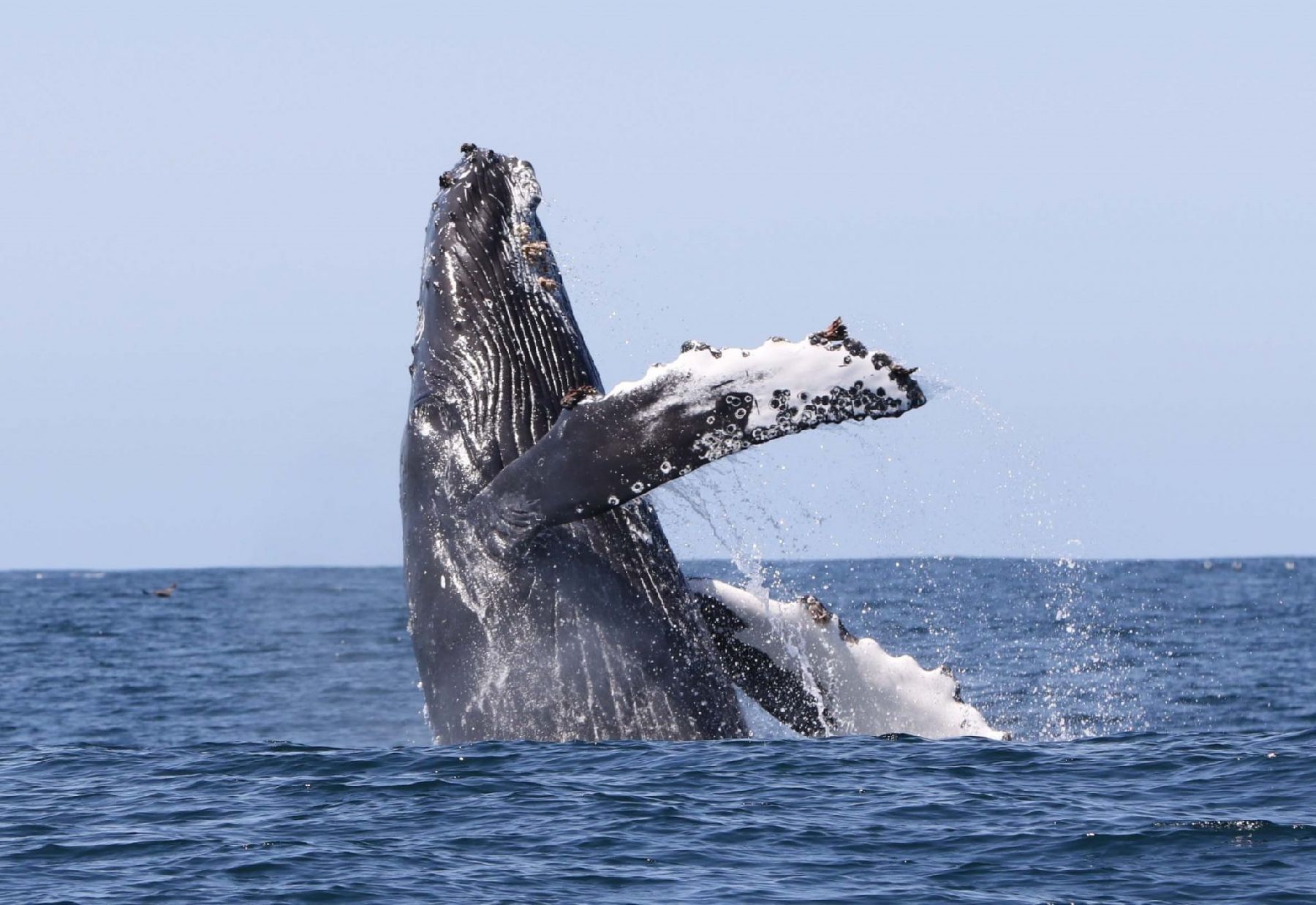
Whales can sometimes be spotted from elevated points along Puerto Rico’s west coast, particularly on clear days when sea conditions make it easier to see movement offshore.
A little patience helps.
Look for a blow above the surface, an unusual splash or, if you are particularly lucky, a whale breaking the surface completely.
Binoculars are useful if you have them, although there is something enjoyable about simply watching the horizon for a while without knowing whether anything will appear.
Even when the whales do not cooperate, Puerto Rico’s northwest coastline gives you a pretty good view.
Going Whale Watching in Puerto Rico by Boat
Another option is to join a boat trip or marine excursion.
A number of operators on Puerto Rico’s west coast offer trips on the water, and during whale season there may be opportunities for sightings along the way.
If seeing whales is particularly important to you, it is worth checking with local operators before your trip to find out what is running and what has been spotted recently.
Wildlife does not work to a timetable, so no responsible operator can promise a sighting.
That unpredictability is part of the experience.
Make a Day of Exploring the Northwest Coast
You do not need to build the whole day around whale watching.
In fact, we would not.
Instead, make it part of a wider day exploring the coastline around Aguadilla and Isabela.
Head out in the morning and spend some time near the coast.
Visit one of the local beaches.
Explore the area around Punta Borinquen.
Stop somewhere for lunch.
And keep one eye on the ocean while you are there.
The northwest coast is known for its rugged scenery, beaches and surf, so there is plenty to do regardless of whether a whale decides to make an appearance.
March Is Still Surf Season
Whales are not the only reason the ocean can be particularly interesting at this time of year.
March falls within Puerto Rico’s main surf season, when Atlantic swells reach beaches around Aguadilla and Isabela.
You do not need to be a surfer to enjoy it.
Watching experienced surfers from the beach can be almost as entertaining, particularly when the waves are bigger.
If you do want to try it yourself, there are surf schools around the northwest coast offering lessons for beginners.
As always, conditions vary considerably between beaches and from one day to another, so follow local advice before entering the water.
Back to Villa Montaña
After a morning or afternoon exploring, head back to Villa Montaña.
One of the advantages of staying on Puerto Rico’s northwest coast is that a day out does not need to involve hours in the car.
You can explore Aguadilla, spend time near the ocean and still be back at the resort with plenty of afternoon left.
Head to the beach.
Spend some time by the pool.
Or settle in for dinner at Eclipse.
And if you are sitting near the ocean, it probably does not hurt to look out toward the horizon one more time.
You never know.
A Different Reason to Visit Puerto Rico in March
Most people do not travel to Puerto Rico specifically to see whales.
They come for the beaches, warm weather, food and the chance to slow down for a few days.
But visiting during whale season adds another possibility.
You might spend three days by the ocean and never see one.
Or you might look out at exactly the right moment.
That is the thing about whale watching in Puerto Rico.
Sometimes the best experiences are the ones nobody can schedule.

Recent Comments